Design
From Webflow Portfolio Template to a Scalable Personal Brand Website
December 24, 2025
Follow us
Portfolio templates are quick to launch, visually polished, and built to showcase work without overthinking structure. For students, freelancers, and early-stage creators, they remove friction and make it possible to go live with something professional in a short amount of time. The problem appears later, when the portfolio is no longer just a portfolio.
As your career evolves, your website needs to do more than display projects. It needs to communicate your thinking, your services, your values, and your direction. That’s when many designers realize their portfolio template wasn’t designed to grow with them.
Let's see how a Webflow portfolio template can evolve into a scalable personal brand website, and how using modular components with Modulify makes that transition smoother and more sustainable.
Why Portfolio Templates Are a Great First Step
A Webflow portfolio template is designed to solve a very specific problem: helping designers present their work clearly and attractively.
Most portfolio templates focus on strong visuals, clean layouts, and straightforward navigation. They are responsive by default, SEO-friendly, and easy to customize at a surface level. For launching a personal site quickly, this is exactly what you want.
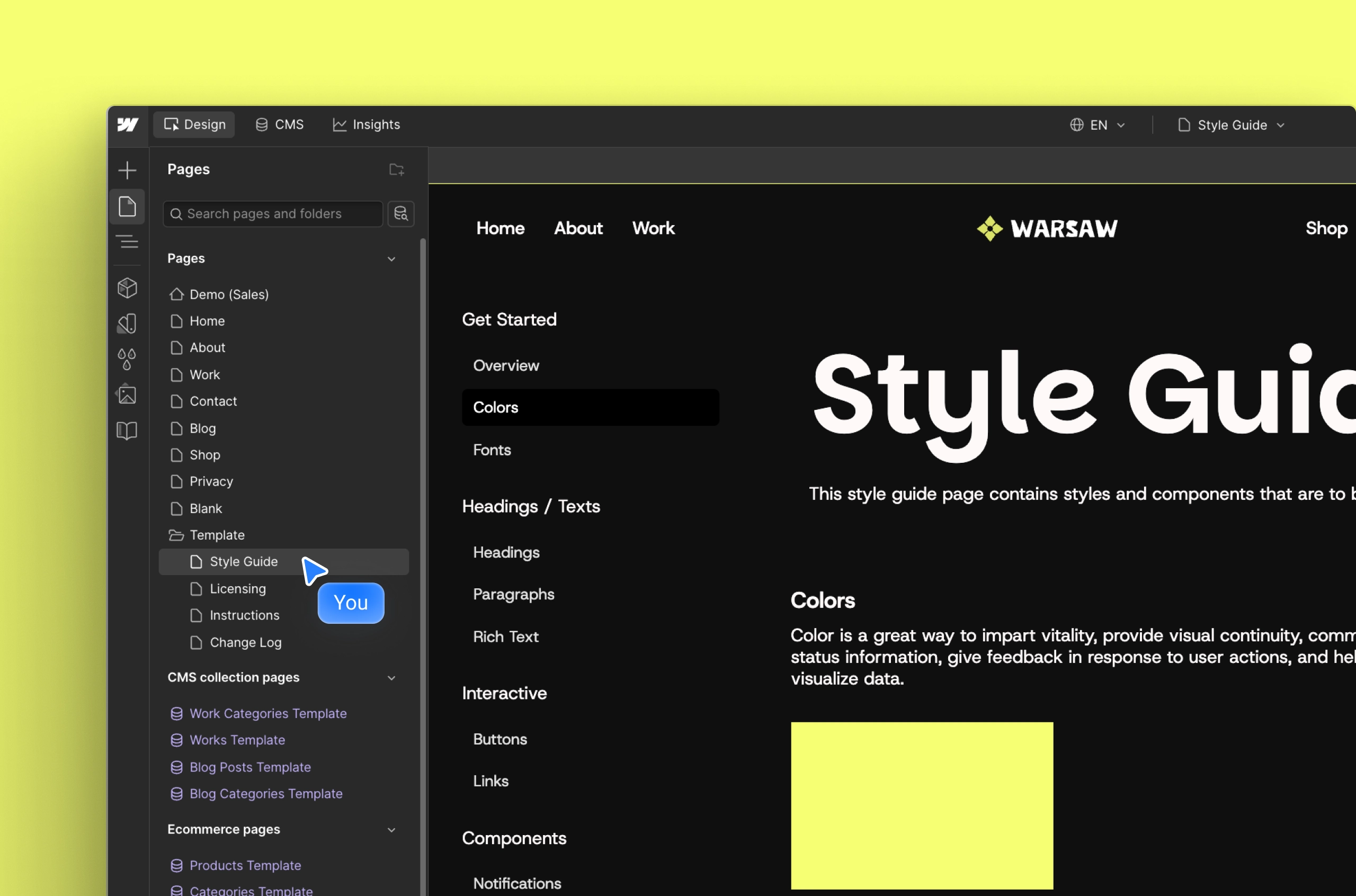
At this stage, the website’s job is simple. It introduces who you are, shows what you’ve done, and makes it easy for someone to contact you. A good portfolio template handles this well and lets you focus on building experience instead of building infrastructure.
The limitation isn’t the template itself — it’s the assumption that your website will stay frozen in this role.
When a Portfolio Needs to Become a Brand
Over time, most designers outgrow the “project gallery” format. You start offering services instead of just showing work. You want to explain your process, share insights, write articles, or attract a specific type of client. The site needs to communicate more context and more personality. It needs to work as a personal brand website, not just a visual archive.
This is where many Webflow portfolio templates begin to feel restrictive. Sections are tightly designed around project thumbnails. Pages aren’t built for reuse. Adding new content types often feels like bending the template rather than extending it.
Without structure, growth turns into a series of one-off fixes.
The Shift From Pages to Components
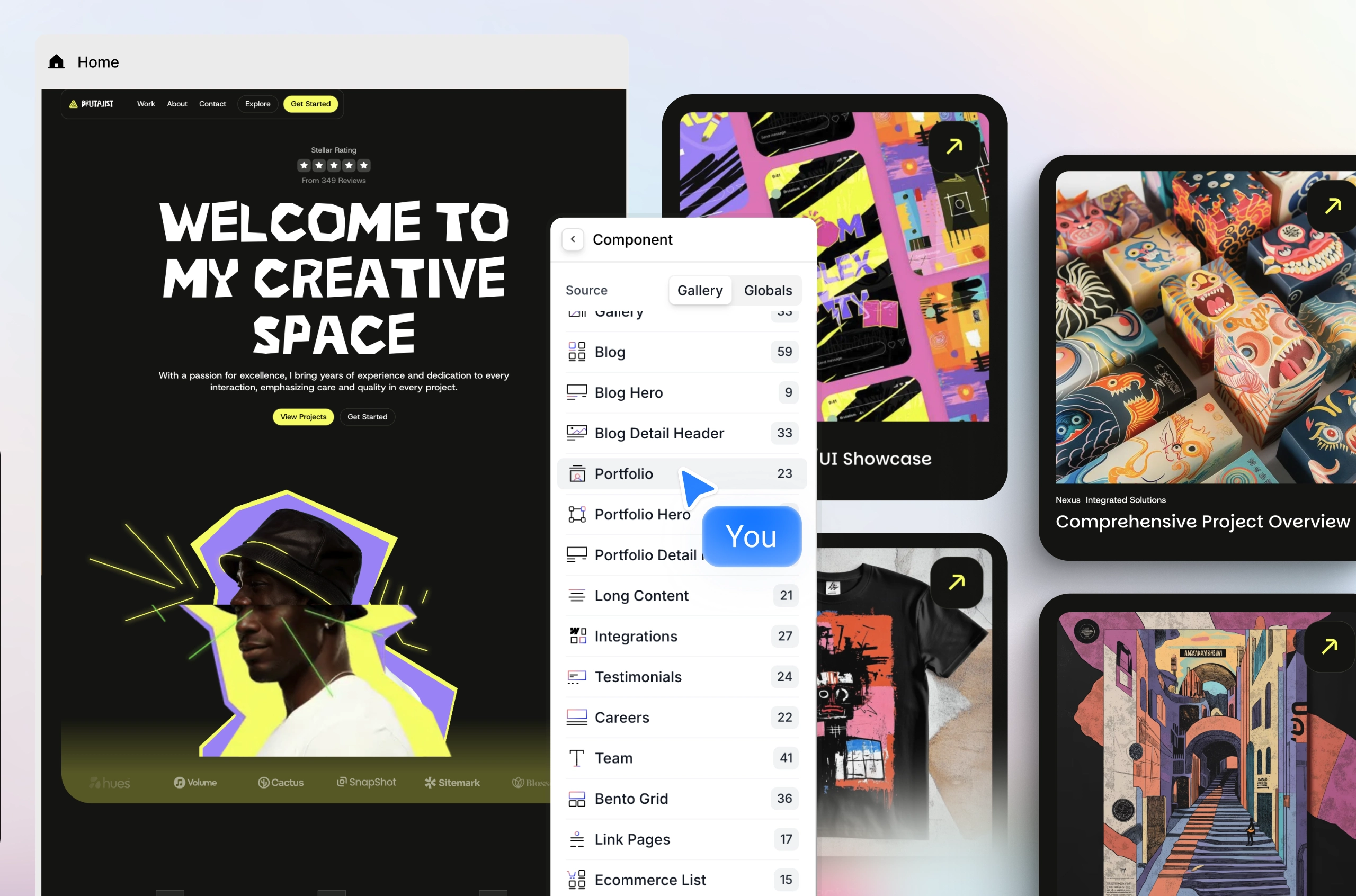
The key shift in turning a portfolio into a scalable website is moving away from page-based thinking. Instead of asking how to redesign individual pages, the question becomes how to build reusable elements that support different kinds of content. Project sections, testimonials, service descriptions, CTAs, and content blocks should be able to appear in multiple contexts without being rebuilt every time.
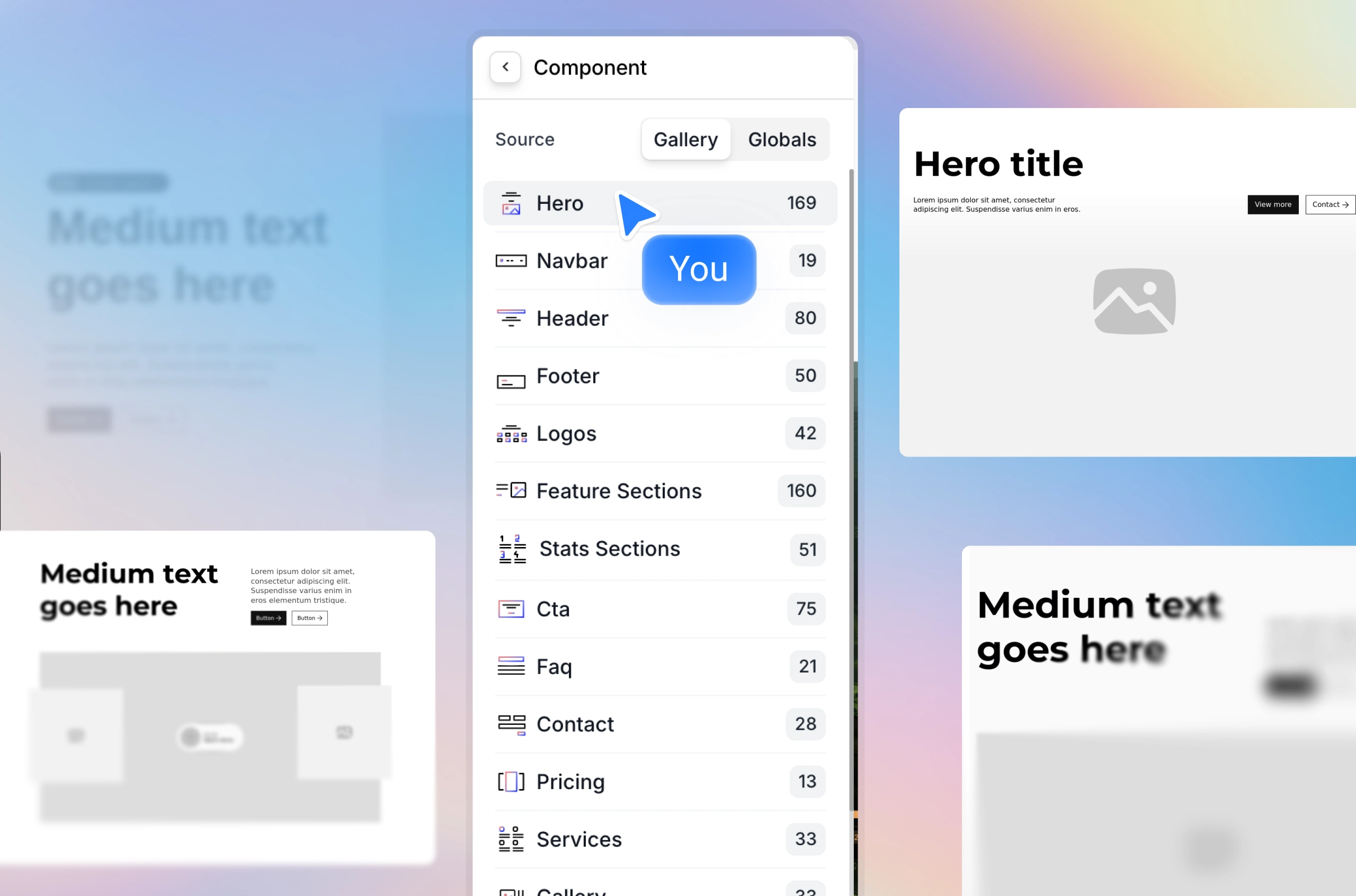
This is where modular thinking becomes essential. A scalable Webflow personal brand website is built from components that can be rearranged, adapted, and reused as your message evolves. When those components follow consistent rules, the site grows without losing coherence.
Evolving a Webflow Portfolio Step by Step
The evolution doesn’t happen all at once.
Most designers begin by expanding beyond the homepage and project pages. A services page appears. An about page becomes more narrative. Maybe a blog or resources section follows. Each new addition puts pressure on the original template structure.
With a modular approach, these additions don’t require redesigning the entire site. Instead, existing components are reused and adapted. A project layout becomes a case study layout. A hero section gains variations. A simple CTA evolves into a reusable conversion block.
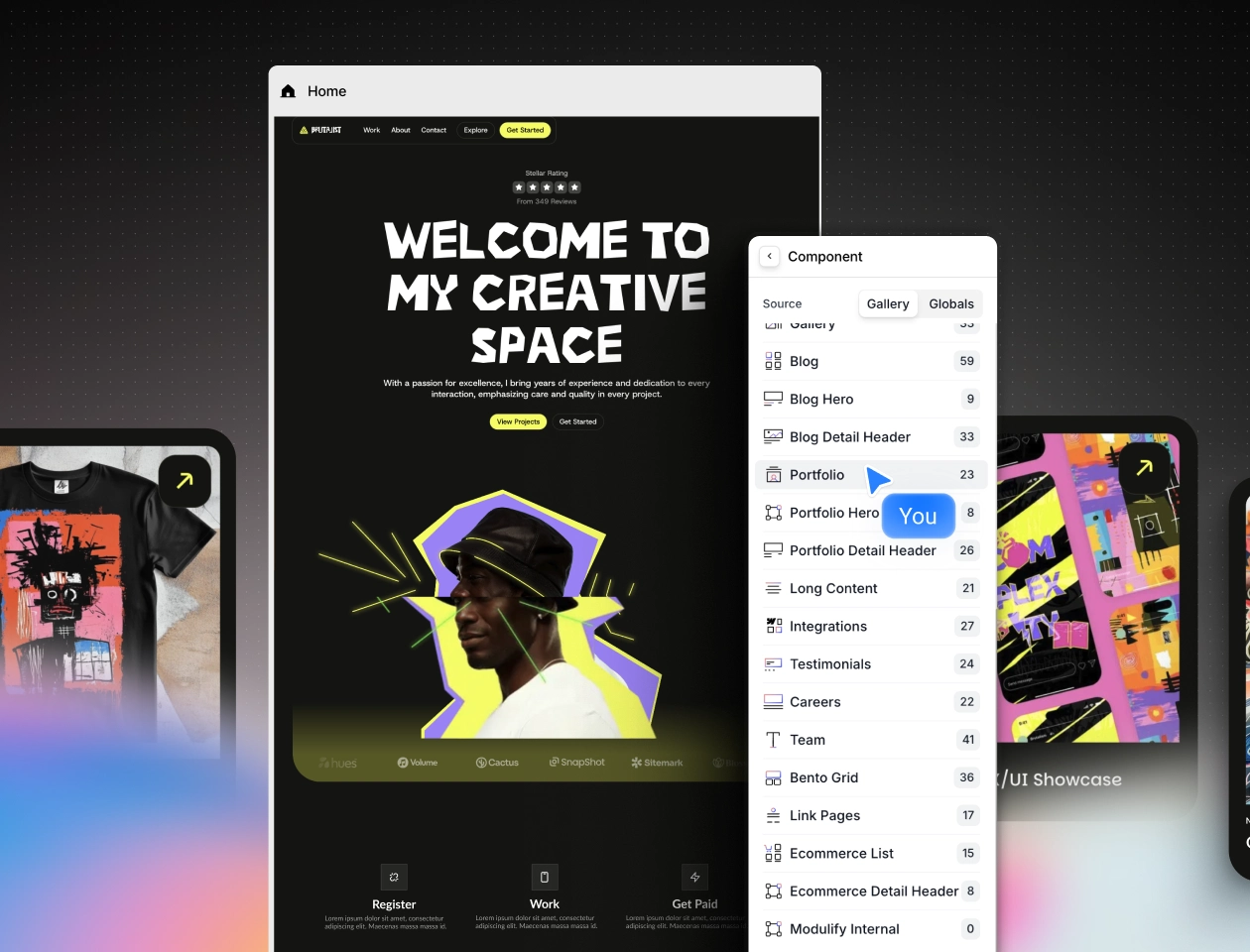
Modulify components are designed to support this kind of evolution. Rather than locking designers into fixed portfolio sections, they provide flexible building blocks that can shift as the site’s role changes.
Using Modulify to Scale Without Rebuilding
Modulify fits naturally into the transition from portfolio to personal brand because it focuses on systems, not pages. Instead of duplicating sections to create new layouts, designers can work with components that already support variation. Layouts can change, content can expand, and structure can adapt without breaking consistency.
This is especially useful for designers who are still defining their positioning. As services evolve and messaging becomes clearer, the site can change with them. There’s no need to “start over” every time your direction sharpens. The result is a Webflow website that feels intentional, even as it grows.
Why This Matters for Freelancers and Independent Designers
For freelancers, a personal website isn’t just a portfolio — it’s a sales tool, a credibility signal, and often the first impression a client has of your work.
A scalable personal brand website allows you to:
- explain your value beyond visuals
- speak directly to your ideal clients
- support new offerings without friction
When the site is built modularly, these changes feel manageable instead of overwhelming. You spend less time fighting structure and more time refining the message and design. Starting with a Webflow portfolio template doesn’t limit this path — but staying locked into template thinking does.
From “Here’s My Work” to “Here’s What I Do”
The most successful personal brand websites move beyond showing work and start telling a story. They explain why projects exist, how problems are solved, and what kind of collaboration is possible. This requires more flexibility than most portfolio templates offer by default.
By evolving your site with modular components, you create space for that story to unfold. Pages become narratives instead of layouts. Content becomes adaptable instead of static. That’s the difference between a portfolio that looks good and a website that works for you.
Final Thought
A Webflow portfolio template is a strong starting point, not a final destination. As your career grows, your website should grow with you — without forcing rebuilds, redesigns, or constant cleanup. The transition from portfolio to personal brand doesn’t require abandoning templates, but it does require moving beyond rigid structures.
With a modular approach and tools like Modulify, designers can evolve their Webflow portfolio into a scalable personal brand website that supports long-term growth, experimentation, and clarity.
Other posts
Related blog posts