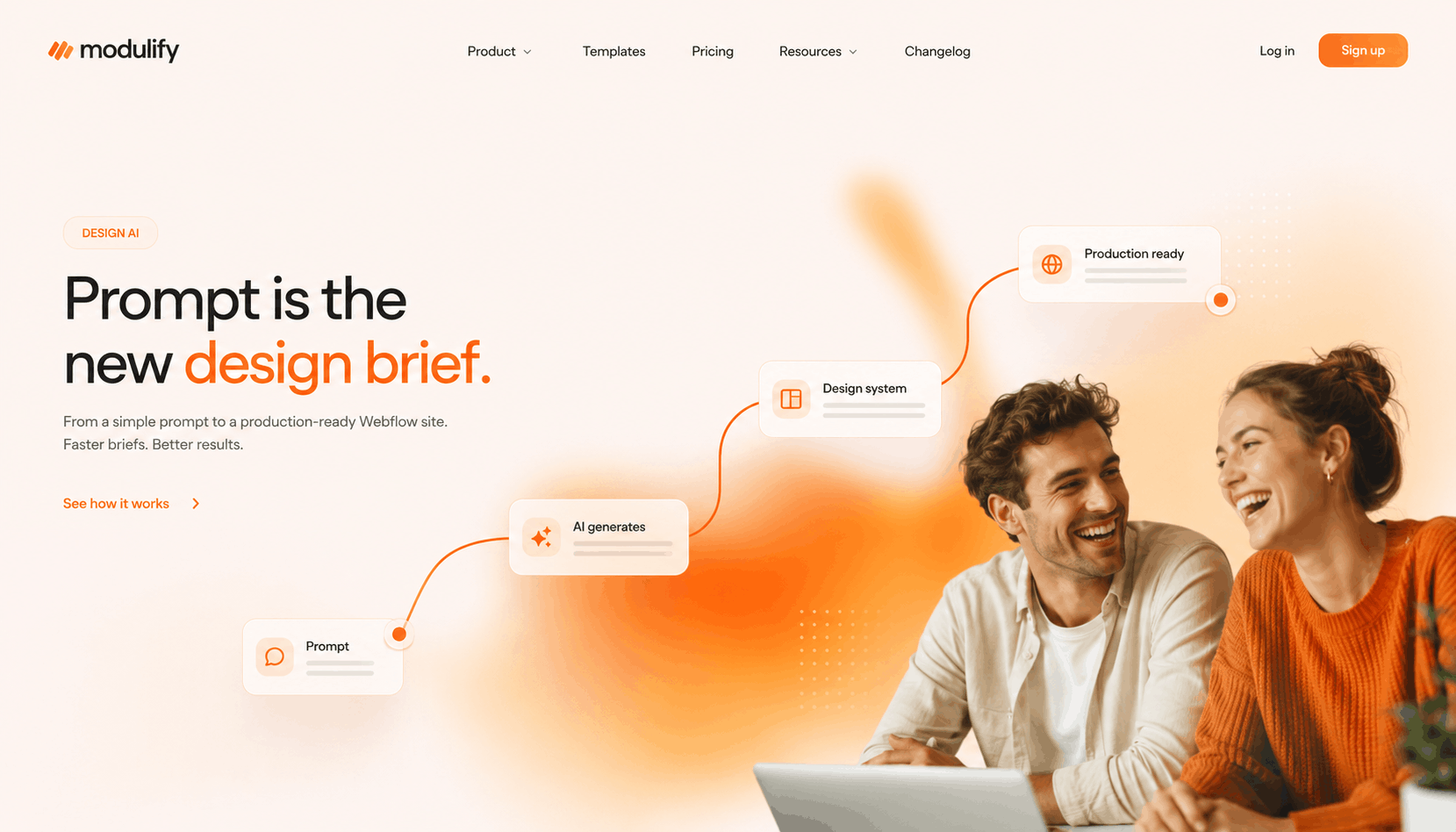
The phrase “AI website builder” has started to lose its meaning.
Every few weeks, a new tool appears promising to generate a full website in seconds. The demos look impressive: a prompt goes in, a layout appears, and within moments you have something that resembles a finished site. Speed is often the headline feature—and it matters—but for a general audience, it’s usually treated as the end goal.
But for Webflow users, that promise quickly breaks down.
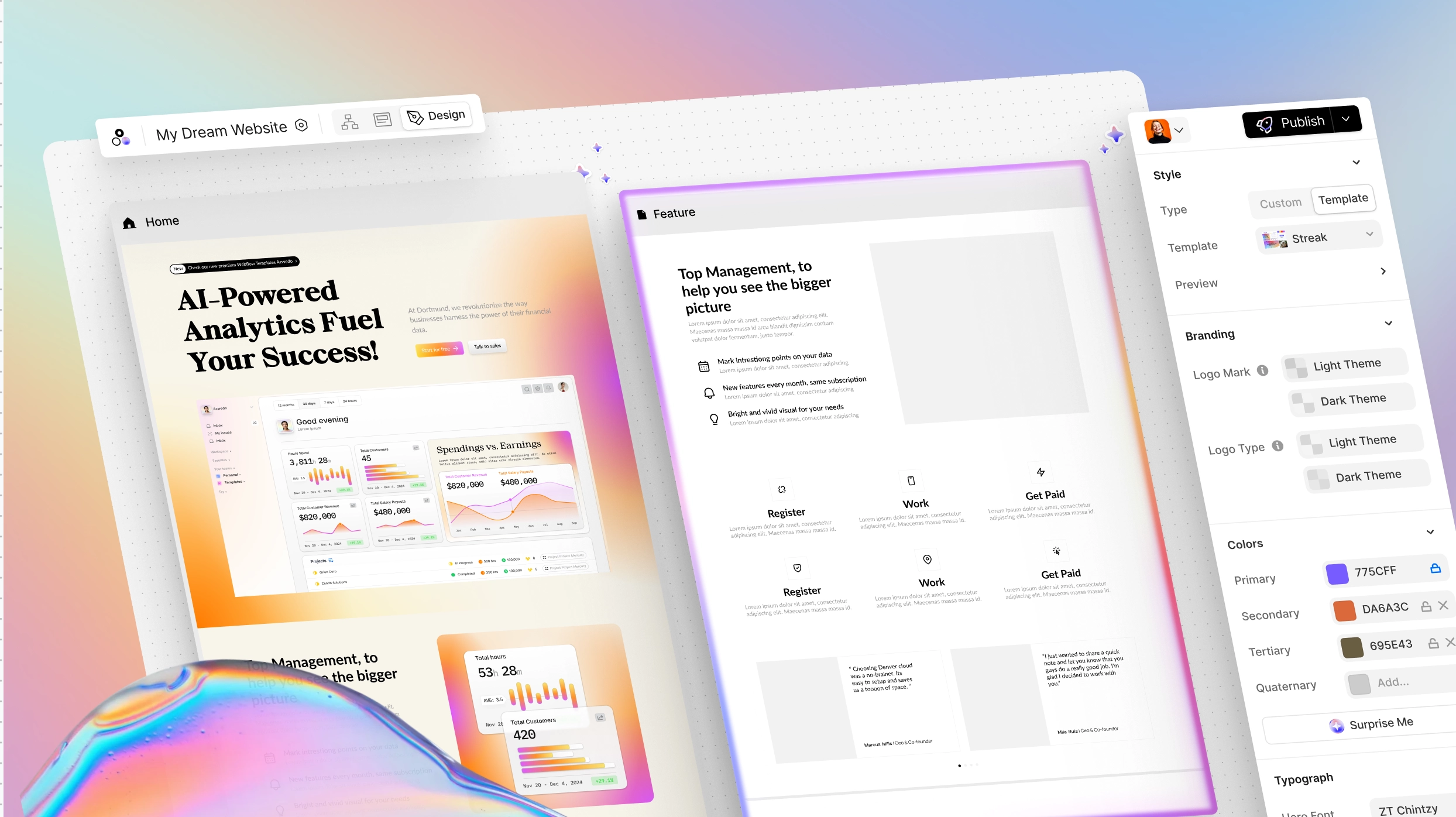
At first glance, Modulify might seem like it belongs in the same category. It uses AI, it quickly generates layouts, and it helps you move faster. Yet it was built precisely because most AI website builders either ignore professional tools like Webflow entirely—or fail to serve Webflow professionals in any meaningful, long-term way.
To understand why Modulify is not “just another AI website builder,” it’s important to understand what Webflow users actually value—and why speed alone is an incomplete benchmark.
The Core Problem With Most AI Website Builders
Most AI website builders are designed around a single goal: reduce the time it takes to get something on the screen—often at the expense of what comes next.
This approach works well for general use cases like:
- Landing page experiments
- One-off demos
- Non-technical users who need a quick presence
However, it falls apart as soon as a project needs to scale, evolve, or be handed off.
The output from most AI builders is rarely meant to be maintained. Class names are inconsistent, structure is fragile, and layouts are tightly coupled to the initial generation. Editing often feels like fighting the tool rather than building with it.
For Webflow users—especially freelancers, agencies, and in-house teams—this is not a minor inconvenience. It directly conflicts with how they work.
Webflow is not just a visual editor. It is a system-driven environment where structure, naming conventions, and reusability matter. When AI output ignores those principles, it creates technical debt almost immediately.
In that context, speed without structure becomes misleading. Saving time upfront only to lose more time cleaning, restructuring, or rebuilding is not a win.
Webflow Users Don’t Think in Pages — They Think in Systems
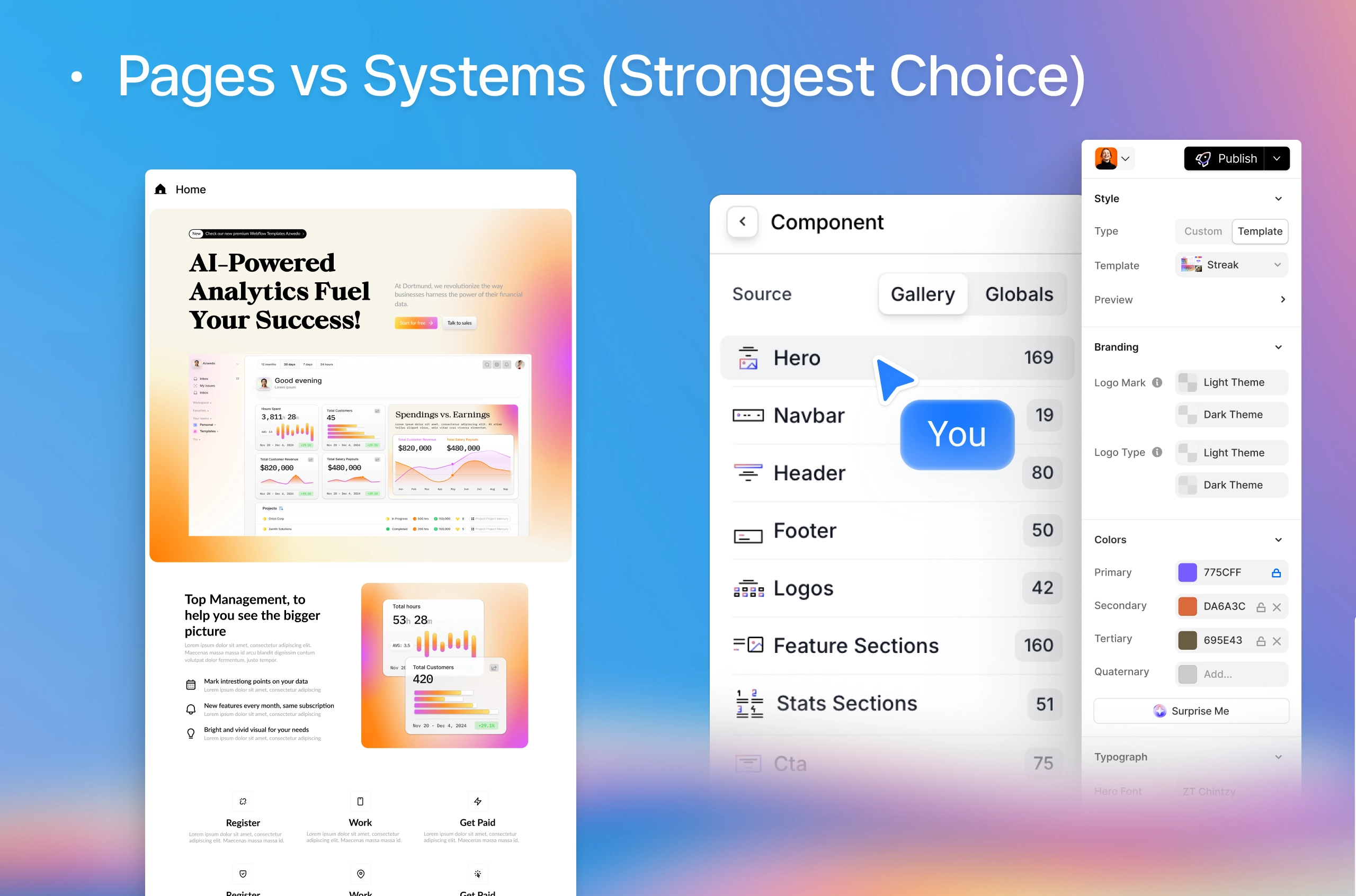
A key difference between Webflow users and the general website-builder audience is mindset.
Webflow professionals rarely think in terms of isolated pages. They think in:
- Design systems
- Reusable components
- Consistent spacing and typography scales
- Predictable class hierarchies
This is why methodologies like Client-First are so widely adopted. They provide a shared language and structure that makes projects easier to scale, collaborate on, and maintain over time.
Most AI website builders, designed for general audiences, ignore this entirely.
They generate something that looks right but has no respect for the underlying system. As a result, the output is often disposable. It’s fine for inspiration, but not something you would confidently build on for months or years.
Modulify was built from the opposite assumption:
AI output should be production-ready, not just visually acceptable.
Modulify’s Core Philosophy: Accelerate, Don’t Replace
One of the biggest misconceptions about AI in design is that its role is to replace decision-making.
In practice, that’s not what professionals want.
Webflow users already know how to design. They already understand layout, hierarchy, responsiveness, and branding. What slows them down is not creativity—it’s repetition.
Rebuilding the same sections.
Reapplying the same structure.
Recreating layouts that follow known patterns.
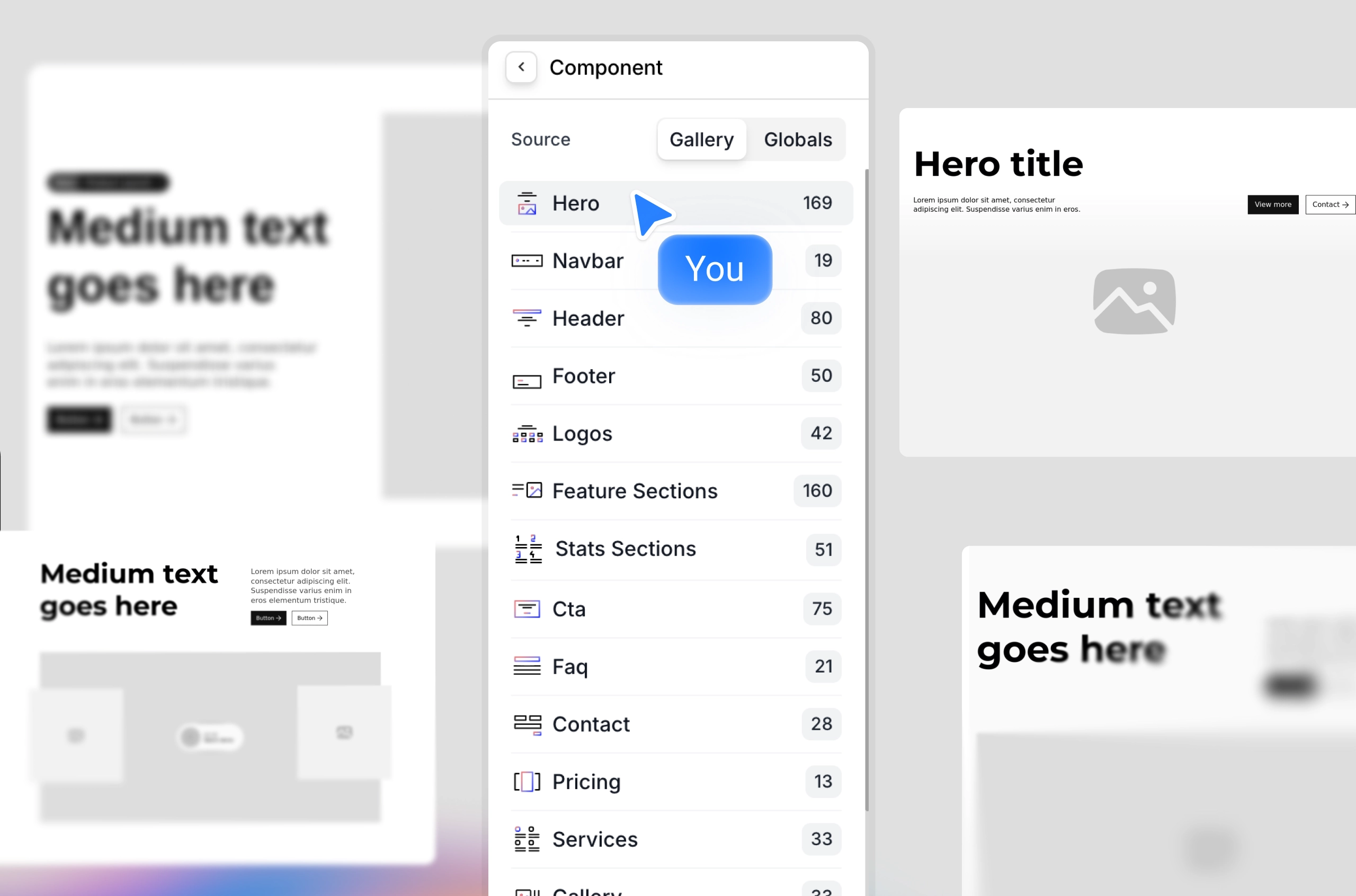
Modulify focuses on accelerating these repeatable, system-based tasks—without sacrificing structure or consistency.
Instead of asking only, “How fast can we generate a website?”, the better question is:
“How clean and extensible is this when it lands in Webflow?”
That shift changes everything.
Modulify treats AI as a collaborator that respects constraints rather than ignoring them. The goal is not to impress with novelty, but to produce output that feels familiar, predictable, and safe to work with.
When AI aligns with existing workflows, it doesn’t feel disruptive—it feels helpful.
Why “Demo Speed Alone” Is the Wrong Metric
Many AI tools optimize for what looks good in a demo.
A fast, flashy generation creates excitement, but it hides the real cost. The moment a designer tries to customize the output, add new pages, or integrate it into a larger project, the weaknesses surface.
Webflow users care about different questions:
- Can I extend this without breaking it?
- Can I reuse this structure in another project?
- Can another designer understand what was generated?
- Does this align with Client-First or similar conventions?
These questions don’t show up in demos, but they determine whether a tool is used once or adopted long-term.
Modulify prioritizes answers to those questions alongside generation speed—not instead of it. The result may not feel “magical” in the traditional sense—but it feels reliable. And reliability is what professionals trust.
AI That Respects Craft
There is also a philosophical difference at play.
Many AI website builders implicitly suggest that building websites is trivial—that it can be reduced to a prompt and a button click. For experienced Webflow users, this misses the point entirely.
Good websites are not accidental. They are the result of deliberate structure, thoughtful constraints, and repeatable systems. AI that ignores this craft does not elevate the work—it cheapens it.
Modulify was designed with respect for that craft.
It does not try to replace designers, developers, or established methodologies. Instead, it works within them. The AI becomes a force multiplier for best practices rather than a shortcut around them.
This is why Modulify resonates more with professionals than with casual users. It assumes competence and builds on it.
Not Just Another Builder
Calling Modulify an “AI website builder” is understandable, but incomplete.
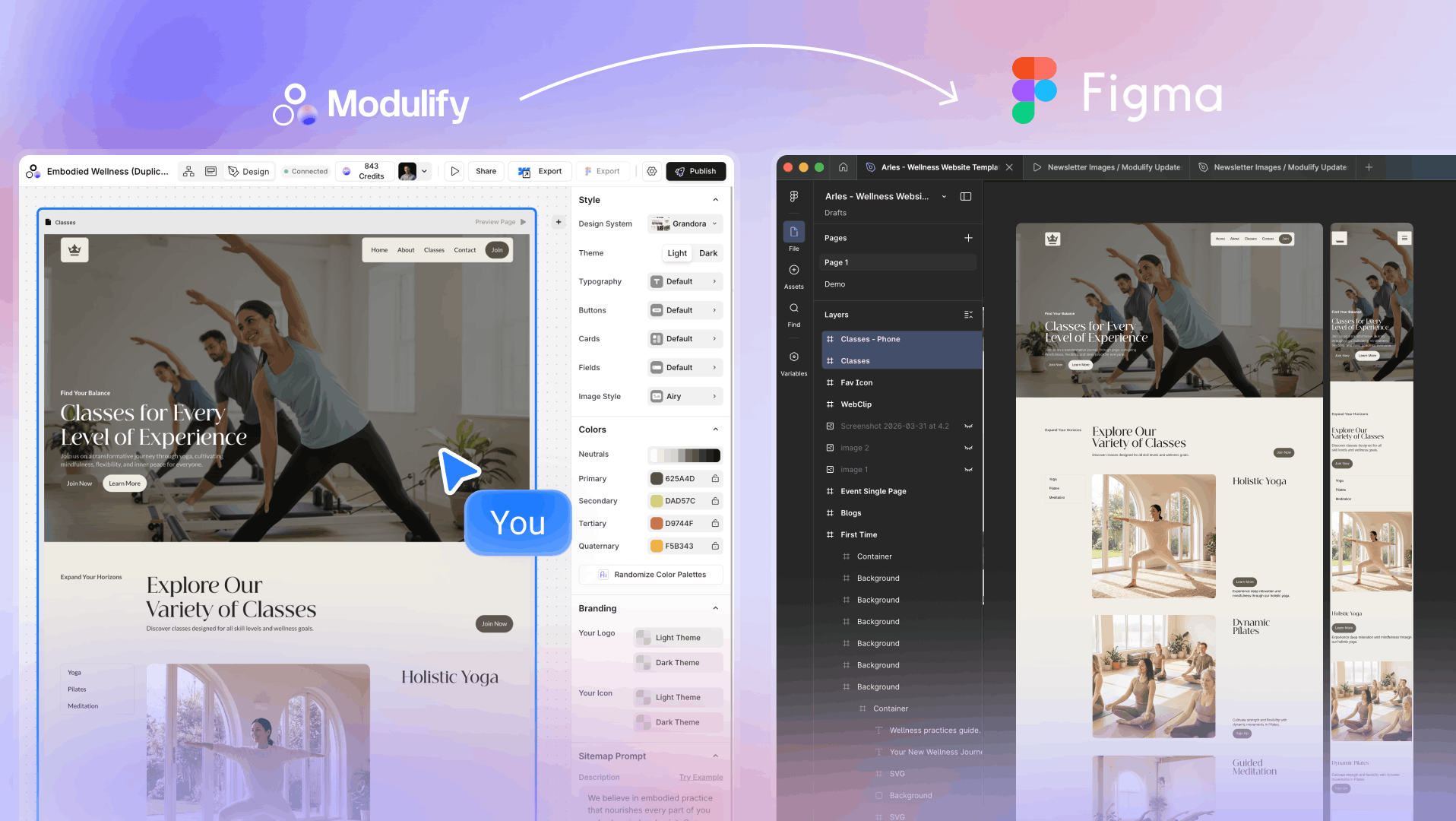
A more accurate description is an AI-powered system for generating structured, scalable Webflow layouts—with export paths that extend beyond Webflow, including clean HTML. That distinction matters because it reflects intent.
Modulify is not trying to be everything to everyone. It is deliberately focused on Webflow users who care about long-term maintainability, clean structure, and professional workflows.
In a crowded space, that focus is a strength.
The future of AI in web design will not belong to tools that generate the fastest demos. It will belong to tools that, in addition to speed, quietly integrate into real workflows and make professionals better at what they already do.
That is the category Modulify is building toward—and why it is not just another AI website builder.