
Design
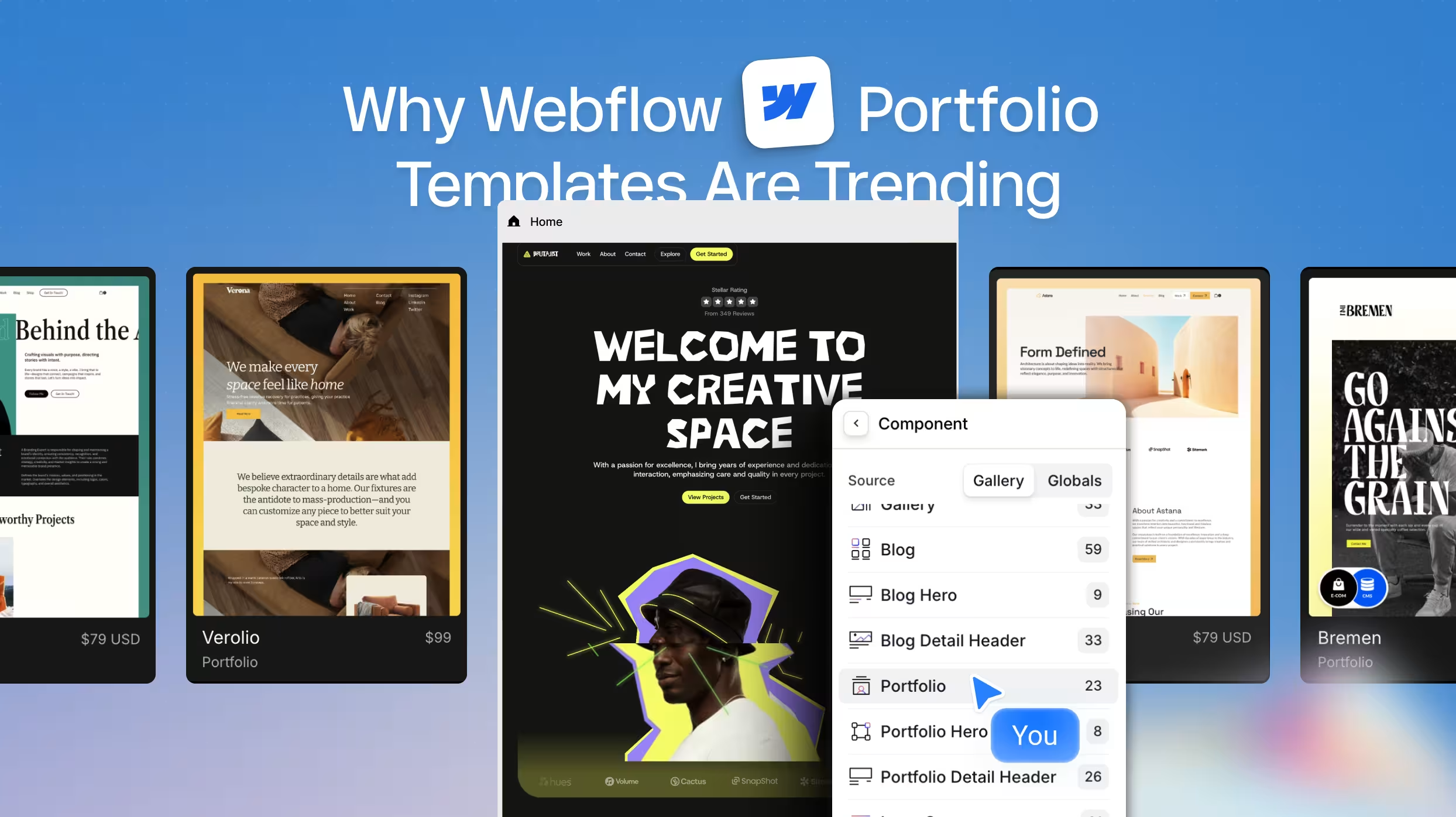
Why Webflow Portfolio Templates Are Trending
January 20, 2026
Follow us
Something significant has shifted in how people work over the past decade, and that shift explains why portfolio websites have become more important than ever — and why Webflow has captured so much of that demand.
The freelance economy has exploded. What was once a small segment of the workforce has grown into a substantial portion of how work gets done globally. Designers, writers, developers, marketers, consultants, photographers, video editors, and specialists of every kind have moved away from traditional employment toward independent work. Some by choice, seeking flexibility and autonomy. Others by circumstance, as companies rely more on contract talent than permanent hires.
This transformation has created millions of professionals who need something they didn't need before: a way to present themselves online. A portfolio website has become as essential to freelance success as business cards were to previous generations — except the stakes are higher, because potential clients often decide whether to reach out based solely on what they see on your site.
The New Reality of Freelance Work
The scale of independent work is staggering when you look at the numbers. Estimates suggest that over a third of the workforce in developed economies now does some form of freelance work, and that percentage continues to climb. Platforms like Upwork, Fiverr, and Toptal have made finding freelance opportunities easier than ever, while remote work normalization has removed geographic constraints that once limited who could work with whom.
What makes this wave of freelancers different from previous generations is its diversity. Freelancing was once dominated by specific professions — writers, designers, consultants with decades of experience. Now it includes people from every background and experience level. A marketing manager leaves corporate life to offer consulting services. A graphic designer builds a client roster while raising children. A recent graduate skips traditional employment entirely to launch a freelance practice.
This diversity matters because most of these people share a common characteristic: they're experts at whatever service they provide, but they're not experts at building websites. A talented illustrator knows how to create compelling visual work but may never have touched code. A skilled strategist can advise Fortune 500 companies but might struggle to explain what HTML does. Technical website development isn't their skill, and it shouldn't need to be.
Yet they all need professional web presence, because in freelance markets, your website is often the first thing potential clients see. Before you get a chance to pitch your services or demonstrate your expertise, your website either builds confidence or raises questions.
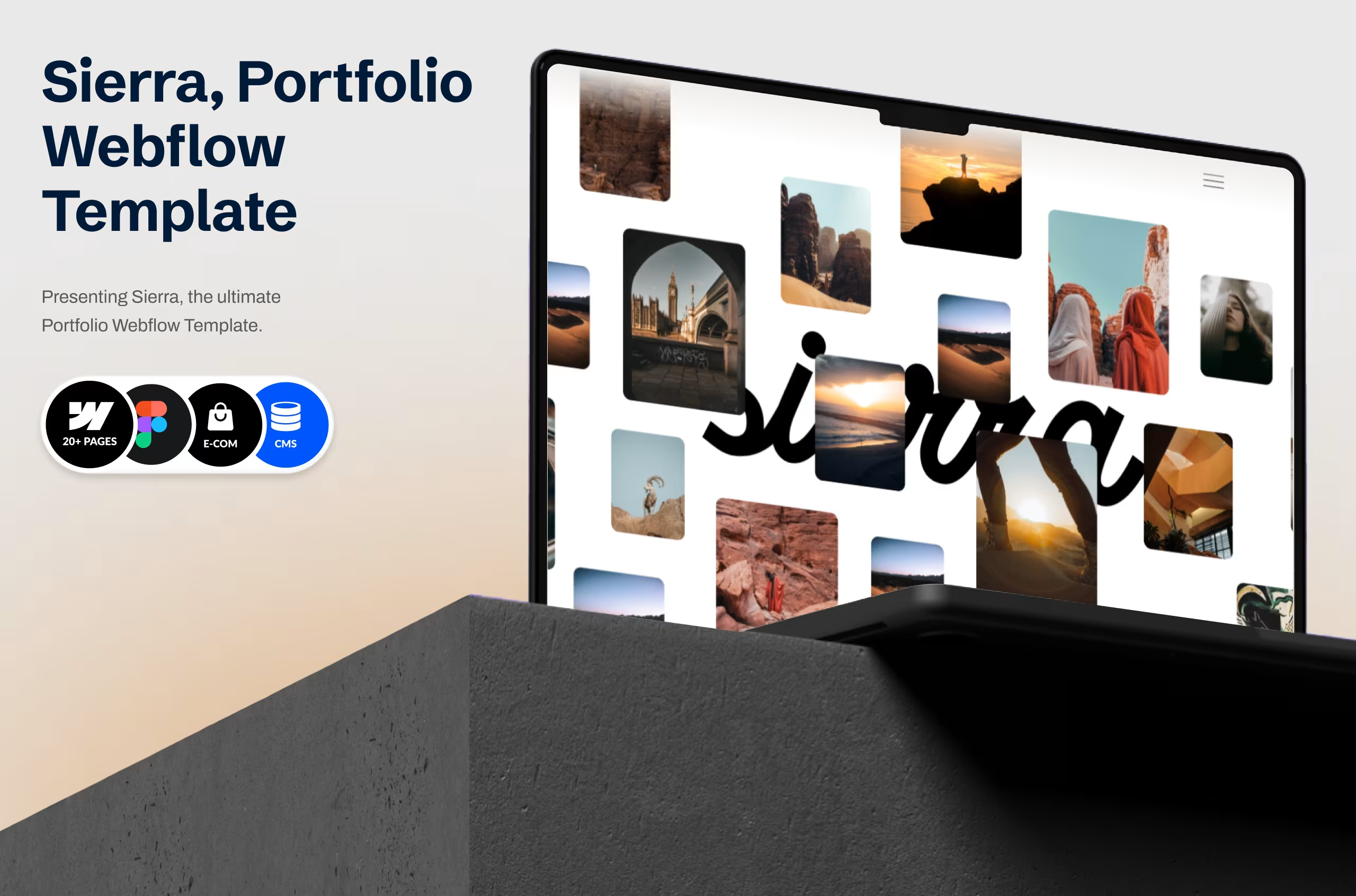
A polished portfolio suggests professionalism; an amateurish one suggests the opposite, regardless of how good your actual work might be.
Why Traditional Options Failed Freelancers
For years, freelancers faced an uncomfortable choice. They could learn web development themselves, investing significant time in skills tangential to their actual expertise. They could hire developers to build custom sites, spending money they might not have and creating dependencies for future updates. Or they could use website builders that constrained their creativity, producing sites that looked obviously templated and failed to represent their capabilities well.
None of these options served freelancers particularly well. Learning development is a substantial investment that detracts from building client relationships and doing actual work. Hiring developers creates ongoing expense and removes the ability to make quick updates. Traditional website builders often produce sites that all look somewhat alike, undermining the differentiation that freelancers need to stand out.
Webflow changed this equation by offering genuine design control without requiring code. A graphic designer can create exactly the portfolio layout they envision without writing a line of JavaScript. A photographer can adjust their gallery presentation without involving a developer. The platform provides professional capabilities that previously required technical expertise while remaining accessible to people whose expertise lies elsewhere.
This accessibility explains Webflow's growth among creative professionals specifically. People who care deeply about visual presentation finally had a tool that let them control that presentation themselves. They weren't constrained to templates that didn't reflect their aesthetic. They weren't dependent on developers who might not understand their creative vision. They could build what they wanted and update it when they needed to.
The Personal Brand Imperative
Beyond just displaying work, freelancers increasingly understand that they need to build personal brands. Showing a portfolio of projects is the minimum expectation; standing out requires establishing a distinctive professional identity.
This has driven demand for portfolio websites that go beyond project galleries. Freelancers want to share their perspectives through blog posts that demonstrate expertise and personality. They want to build email lists that give them direct access to potential clients independent of platform algorithms. They want to control their professional narrative rather than having it defined by third-party profiles on freelance marketplaces.
Owning your own website — rather than relying entirely on platforms like LinkedIn, Dribbble, or Behance — provides something those platforms can't: complete control over how you're presented and direct relationship with your audience. When you build your email list through your own site, you can reach those people regardless of what any platform decides to do with its algorithms or policies. When you publish content on your own blog, you own that content permanently.
Webflow enables this level of ownership with capabilities that match the ambition. The CMS handles blog content effectively. Form integrations connect to email marketing platforms. The flexibility to build whatever pages serve your specific needs means your site can grow with your business rather than constraining it.
From Portfolio Owner to Website Builder
Here's where an interesting opportunity emerges. Freelancers who learn Webflow to build their own portfolios discover they can also build websites for clients. A graphic designer who creates their portfolio site has developed skills that clients need. A marketing consultant who builds their own web presence can offer web development as an additional service.
This expands what freelancers can offer while leveraging skills they've already developed. The same Webflow expertise that created their portfolio can create client websites. Instead of referring web work to developers and losing that revenue, freelancers can keep it themselves and strengthen client relationships by being a more complete solution provider.
The economics are compelling. Web design services command meaningful fees. Clients who trust you with one service often prefer trusting you with related services rather than managing multiple vendor relationships. Adding website development to your offerings can significantly expand revenue without requiring entirely new skills — just deeper application of skills you've already started developing.
This is where tools like Modulify become particularly valuable. Building one portfolio site teaches you Webflow fundamentals. But building client sites efficiently, with professional quality and reasonable timelines, requires production capabilities that manual building struggles to provide.
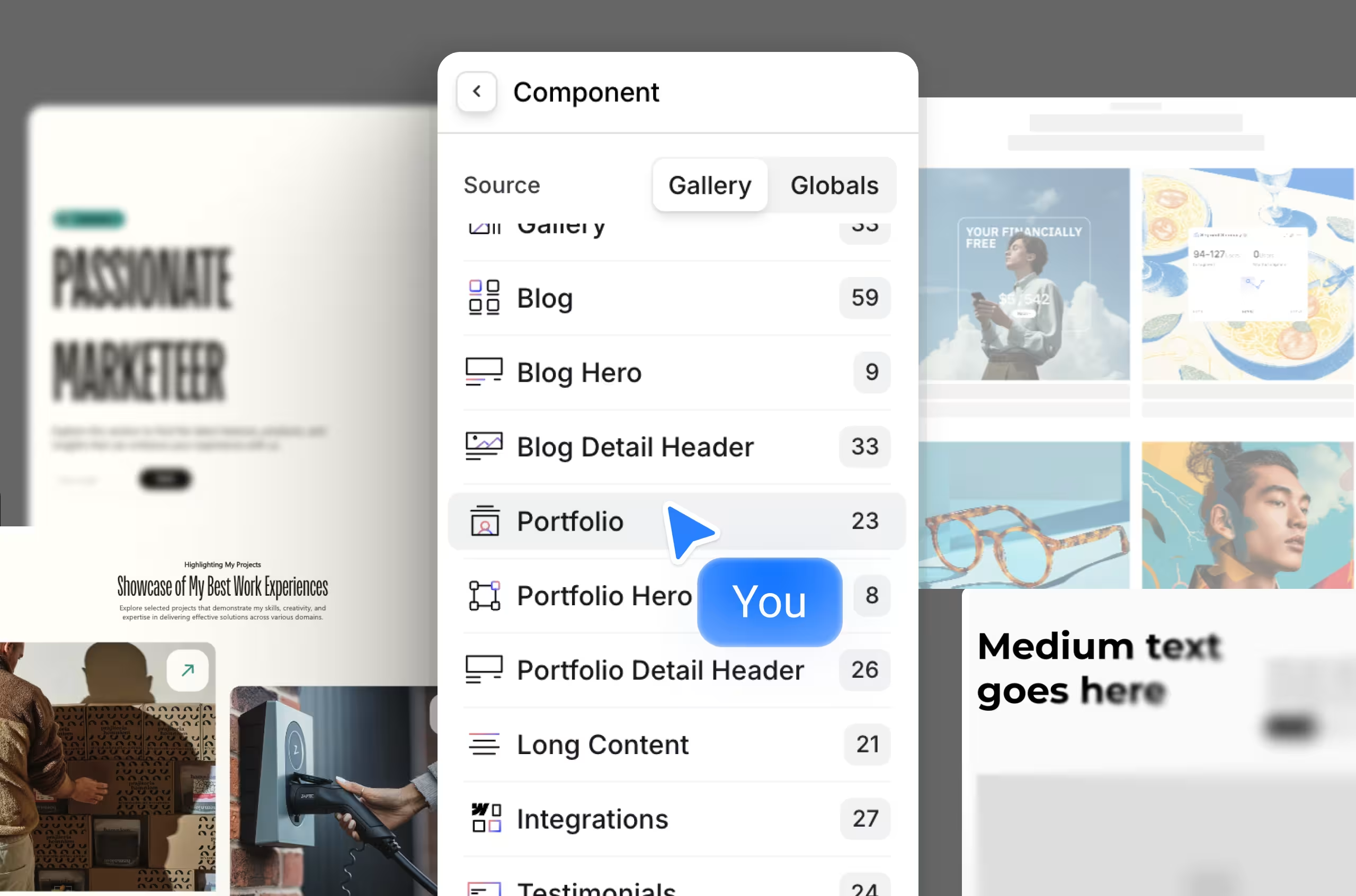
Modulify generates ready-to-use Webflow components — complete sections, full pages, entire design systems — from descriptions of what you need. Instead of building every client site element by element, you describe the project and receive professional components that you customize and deploy. The time savings let freelancers take on more projects or spend more time on the creative direction that clients actually value.
For freelancers specifically, this means you can offer web design services competitively even without years of development experience. The AI handles production efficiency; you provide creative direction and client relationship. Your portfolio grows with each client project, demonstrating not just your primary expertise but your web design capabilities as well.
The Compounding Advantage
Freelancers who embrace this approach find their opportunities compound over time. Each website you build becomes a portfolio piece demonstrating your capabilities. Potential clients see not just your primary work — the design, the photography, the consulting — but also evidence that you can deliver complete web solutions.
This portfolio growth happens automatically as you serve clients. Unlike traditional freelancing where portfolio updates require specific effort, web design work creates its own case studies. Every launched client site can become evidence of your capabilities, attracting the next client and the one after that.
The maintenance aspect of web work also creates ongoing relationships. Websites need updates, content additions, optimization improvements. Clients who hire you to build their sites often retain you for ongoing support. These recurring relationships provide stability that project-based work alone cannot offer.
And because Webflow sites are genuinely yours to maintain — not locked into proprietary systems controlled by development agencies — you remain the natural point of contact for any changes. The client relationship you built during initial development continues through the site's lifetime.
What This Means for Your Practice
If you're a freelancer who hasn't invested in your web presence, you're likely leaving opportunity on the table. Potential clients who might have reached out instead move on because your online presence doesn't inspire confidence. Projects that could have been yours go to competitors who present themselves more effectively.
If you're a freelancer with a basic website who hasn't considered offering web services, you may be missing revenue that's naturally adjacent to what you already do. Clients who trust you with creative work often need websites too. Being able to provide that service strengthens relationships and increases income.
Webflow makes both of these opportunities accessible to freelancers regardless of technical background. Building your own portfolio requires no coding knowledge, just willingness to learn a visual interface. Building client sites scales more easily with AI-assisted tools that handle production while you focus on creative direction and client relationships.
The freelance economy continues growing, and those who position themselves well within it continue benefiting. Professional web presence isn't optional anymore — it's baseline expectation. The ability to deliver web services to clients transforms freelance practices from single-service offerings to more complete solutions.
The tools exist to make this accessible. The opportunity exists to build something meaningful. What happens next depends on whether you decide to act on it.
Modulify helps freelancers build portfolios and client sites faster. AI-generated Webflow components with animations and responsive design, ready for production.

Discover and grow your audience with the checklists in our free guide.

Effortless Web Design starts here. Try Modulify Now!
The only playground you need to build Webflow websites with AI in minutes.


Design & Build Webflow sites in minutes with AI