
Design
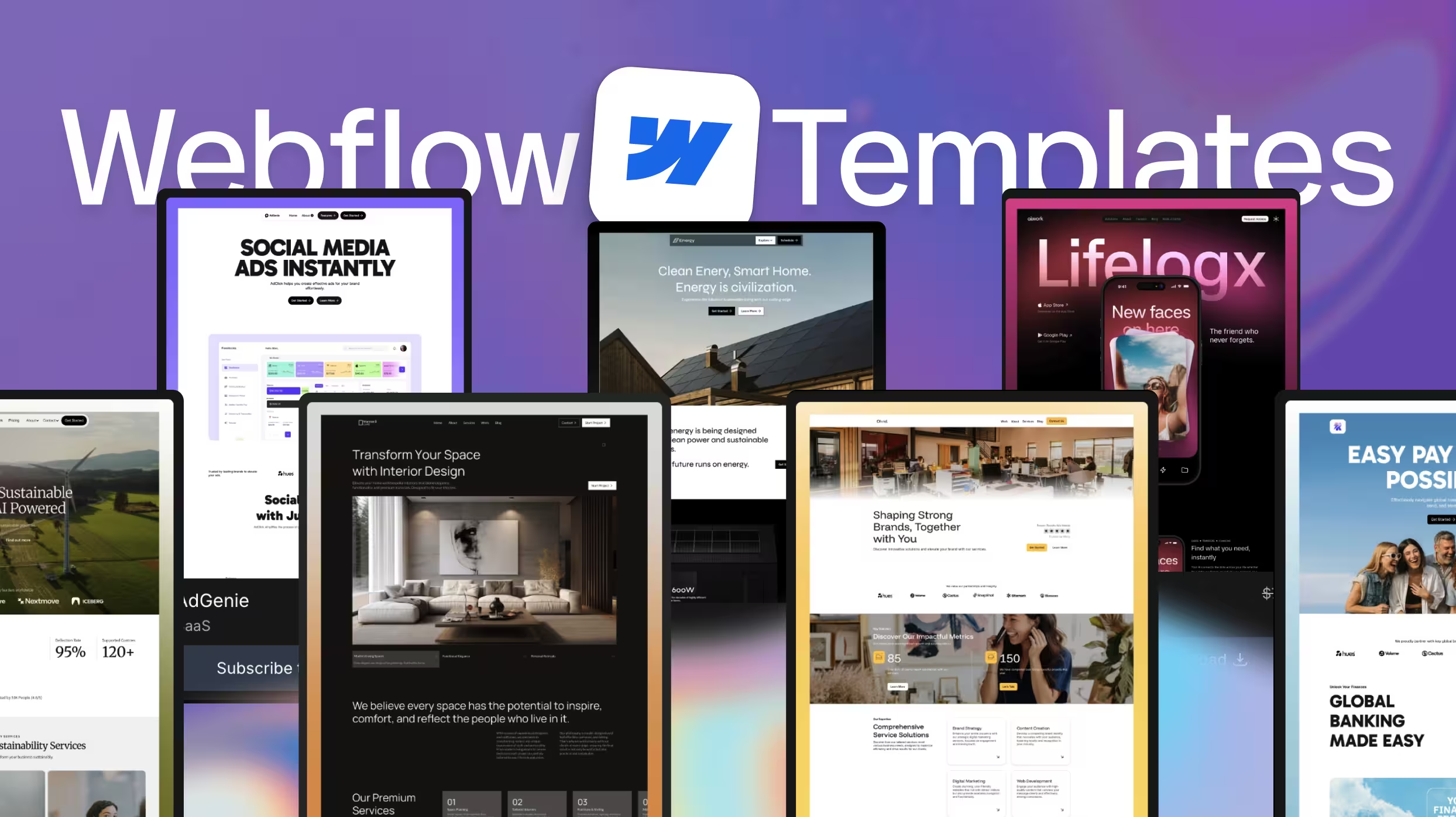
Webflow Templates – When and Where to Use Them
January 20, 2026
Follow us
There's a moment in every website project when you have to make a fundamental decision. Do you start with a blank canvas and build everything from scratch, or do you stand on someone else's foundation and customize from there? This choice shapes everything that follows — your timeline, your budget, your creative options, and ultimately the result you end up with.
Webflow templates represent the second path, and they've become remarkably popular for good reason. But popularity doesn't mean universality. Templates solve specific problems exceptionally well while creating friction in other situations. Knowing when you're in the first category versus the second is worth more than any template recommendation list.
The Situations Where Templates Genuinely Shine
Templates deliver their greatest value when speed matters more than originality. If you're launching a new business and need a professional web presence within two weeks rather than two months, the calculus is straightforward. A well-executed template site establishes credibility immediately. A custom site that isn't finished establishes nothing.
This speed advantage compounds when you lack design expertise. Templates encode professional decisions about typography, spacing, color relationships, and visual hierarchy that take years to develop intuitively. You might not know why certain line heights feel comfortable for extended reading or why specific button sizes invite clicks, but template creators do. Using their expertise gets you professional results without acquiring the underlying knowledge first.
Templates also make sense when your website isn't your product. A consulting firm needs a credible online presence, but their actual value lies in the advice they provide, not in having a distinctive website.
A local restaurant needs people to find their menu and location, not to be impressed by innovative web design. For businesses where the website serves a supporting function rather than being central to the value proposition, templates provide professional adequacy without excessive investment.
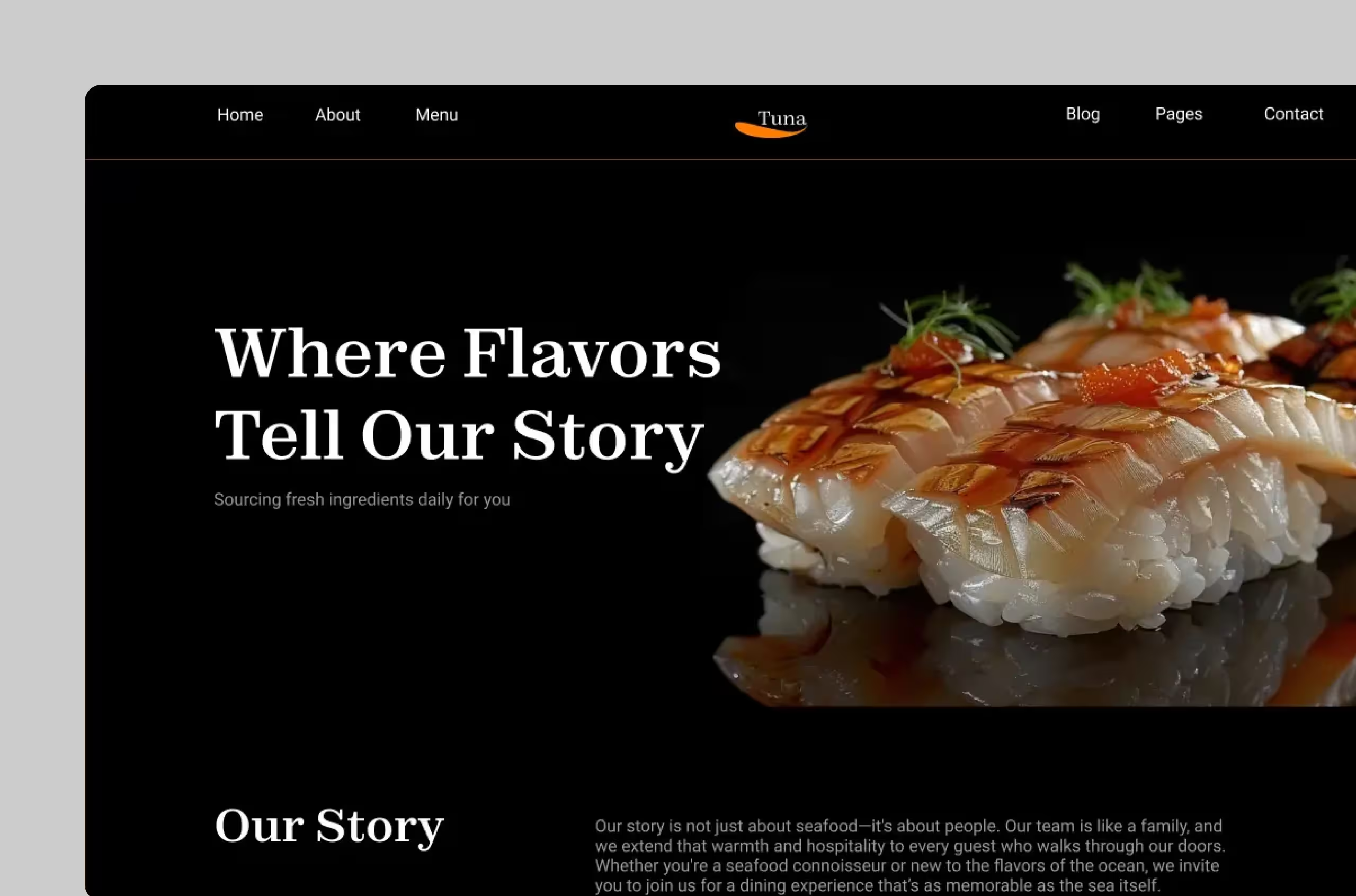
Early-stage projects benefit from template economics differently. Before you know exactly what your business needs, before your positioning has stabilized, before you understand which features matter to your customers — investing heavily in custom design is premature. Templates let you launch, learn, and iterate. When you eventually outgrow the template, you'll know far more about what to build next than you did at the beginning.
The economics also favor templates when you're operating with constraints. Not every project justifies significant development investment. Marketing campaigns with defined end dates, event sites that exist for a few months, microsites testing new ideas — these benefit from template speed and cost efficiency without suffering from template limitations.
When Templates Create More Problems Than They Solve
The template approach breaks down predictably in certain situations, and recognizing these patterns prevents frustration.
Strong brand requirements conflict with template structures. If your organization has detailed visual identity guidelines — specific typography, precise color values, defined spacing systems, distinctive design language — making templates conform to these requirements often takes longer than building correctly from scratch. Templates impose their own design systems, and forcing them to match yours creates constant friction.
Complex information architecture exceeds what most templates anticipate. If your website needs unusual page structures, sophisticated content relationships, or custom functionality that goes beyond standard patterns, you'll spend more time fighting the template's assumptions than benefiting from its foundation.
Differentiation matters in competitive contexts where many players chase the same audience. When your competitors might use similar templates, when your visitors have seen the same layouts elsewhere, when looking distinctive provides actual business advantage — templates work against your goals. They're designed for professional adequacy, not competitive differentiation.
Iteration intensity also matters. If your business requires constant testing — new landing pages weekly, frequent message experiments, regular layout trials — template customization cycles become bottlenecks. Each change requires adapting someone else's structure rather than working with something built around your specific patterns.
The Middle Ground Most People Miss
The conversation usually frames templates and custom development as opposite ends of a spectrum. You either use templates for speed and affordability, or you invest in custom work for flexibility and uniqueness. This framing misses options that have emerged more recently.
AI-powered design generation represents a genuine middle path. Instead of adapting someone else's template to your needs, you describe what you're building and receive custom components generated for your specific situation. The speed approaches template deployment while the output is unique to your project.
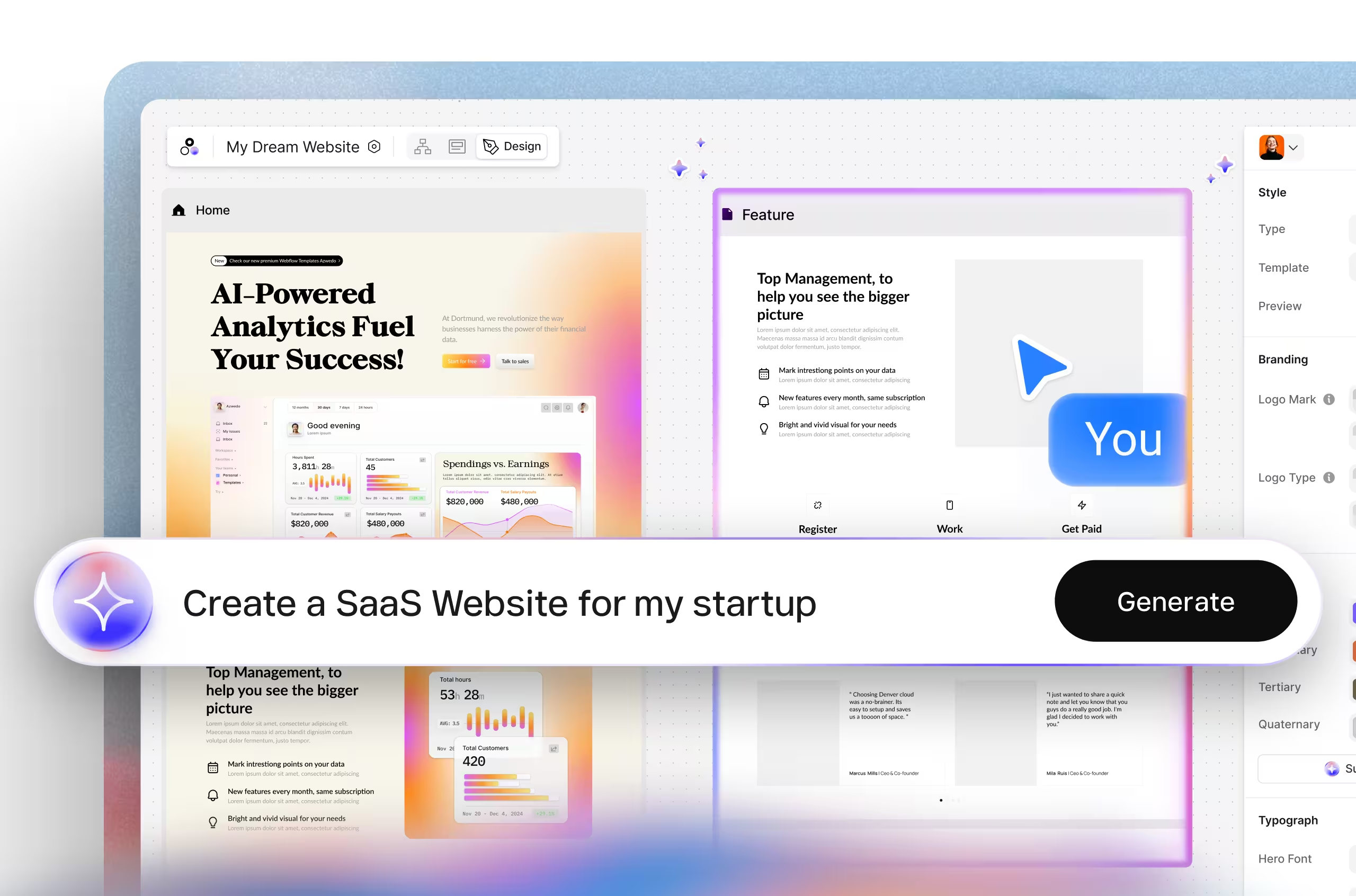
Modulify offers this approach for Webflow users specifically. You describe your business, your audience, your design direction. The system generates pages and components that match your description — not generic templates that thousands of others also access, but custom output that reflects your inputs. When you need variations or different approaches, you generate alternatives rather than manually reworking existing structures.
This matters because the template tradeoff has always been uniqueness for speed. You accepted looking like other sites in exchange for launching quickly. Generation breaks that tradeoff by producing unique output at speeds comparable to template deployment.
For situations where templates would work but uniqueness would be better, generation offers a path forward. For situations where templates would require too much adaptation, generation can produce better-fitted starting points. The option doesn't replace templates entirely — there are still cases where established templates serve perfectly well — but it expands the range of projects that can launch quickly without accepting template limitations.
Practical Decision Making
When evaluating whether templates fit your specific situation, a few questions clarify the decision.
How important is visual distinctiveness to your success? If your website serves primarily functional purposes — conveying information, enabling transactions, providing resources — template appearance matters less. If your website itself influences perception of your capabilities, quality, or creativity, distinctive appearance matters more.
How well does your content fit standard patterns? If your pages, your content types, and your user flows align with common website structures, templates designed for those structures will serve you well. If your needs diverge significantly from standard patterns, template adaptation will consume more time than templates save.
How quickly do you need to launch, and how fixed is that deadline? Genuine urgency favors templates or generation over custom development. Flexible timelines allow you to choose based on other factors.
How much will your website change over time? Sites that launch and remain relatively stable can absorb template limitations more easily than sites requiring constant evolution. If you'll iterate frequently, consider whether template structures support or constrain that iteration.
What's your realistic budget in both money and time? Custom development requires financial investment. Template customization requires time investment. Generation requires less of both but may need learning investment. Know which resources you have available.
Making Templates Work When You Use Them
If templates fit your situation, a few principles maximize success.
Choose based on structural fit, not visual appeal. The template that catches your eye in a marketplace preview may not be the template whose structure matches your content. Evaluate what pages exist, how content is organized, what features are included — then consider whether you like the visual design. Structure problems are expensive to fix; visual adjustments are comparatively easy.
Invest in genuine customization. Templates provide professional foundations, not finished products. The effort you put into adapting content, refining messaging, and personalizing the experience determines whether your site feels crafted or generic. A well-customized template can be excellent; a template with placeholder text replaced but nothing else changed remains obviously a template.
Accept limitations gracefully. Templates impose constraints. Fighting those constraints produces worse results than working within them or choosing a different approach entirely. If you find yourself wanting to change everything about a template, you've likely chosen the wrong template or the wrong approach.
The Broader Perspective
Webflow templates have democratized professional web design in meaningful ways. Capabilities that once required expensive agencies or specialized skills now are accessible to anyone willing to learn the platform. This is genuinely valuable and has helped countless businesses establish credible online presence they couldn't otherwise afford.
But templates are tools, not solutions. They solve specific problems in specific situations. Using them when they fit produces excellent results efficiently. Using them when they don't fit produces frustration and mediocre outcomes.
The growth of alternatives like AI generation expands options rather than eliminating templates. Different situations call for different approaches. What matters isn't loyalty to any particular method but matching the method to the situation.
Your website exists to serve your purposes. Choose the creation approach that serves those purposes best, whether that's a carefully selected template, AI-generated custom components, or full custom development. The goal is effectiveness, not adherence to any particular methodology.
When templates feel limiting but custom development feels excessive, Modulify generates custom Webflow components from your descriptions. Try it free at modulify.ai

Discover and grow your audience with the checklists in our free guide.
Effortless Web Design starts here. Try Modulify Now!
The only playground you need to build Webflow websites with AI in minutes.


Design & Build Webflow sites in minutes with AI